
The EU NIS2 Directive
NIS2 increases the requirements for cybersecurity, risk management, and reporting processes for essential and important entities across 18 critical sectors in the EU.
Get a Free Consultation
NIS2 increases the requirements for cybersecurity, risk management, and reporting processes for essential and important entities across 18 critical sectors in the EU.
Get a Free ConsultationReading time: 7 minutes
The NIS2 Directive is a key component of the European cybersecurity strategy. It requires organizations in critical and important sectors to ensure an appropriate level of security, actively manage risks, and report security incidents. Its aim is to sustainably strengthen the resilience of critical infrastructure and digital services across the EU. Together with the Cyber Resilience Act and the Digital Operational Resilience Act NIS2 forms an important part of the European framework for digital resilience.
The NIS2 Directive is intended to ensure a high common level of cybersecurity across the EU and reduce cyber threats to essential services. Baseline security measures and governance standards are designed to prevent incidents that could impair critical services, destabilize key sectors, or cause significant social and economic damage.
NIS2 applies to organizations in defined critical sectors as well as to important economic actors. The relevant criteria are sector, size, and the importance of the services provided. Organizations are classified as “essential” or “important” entities, with different requirements and levels of supervisory intensity.
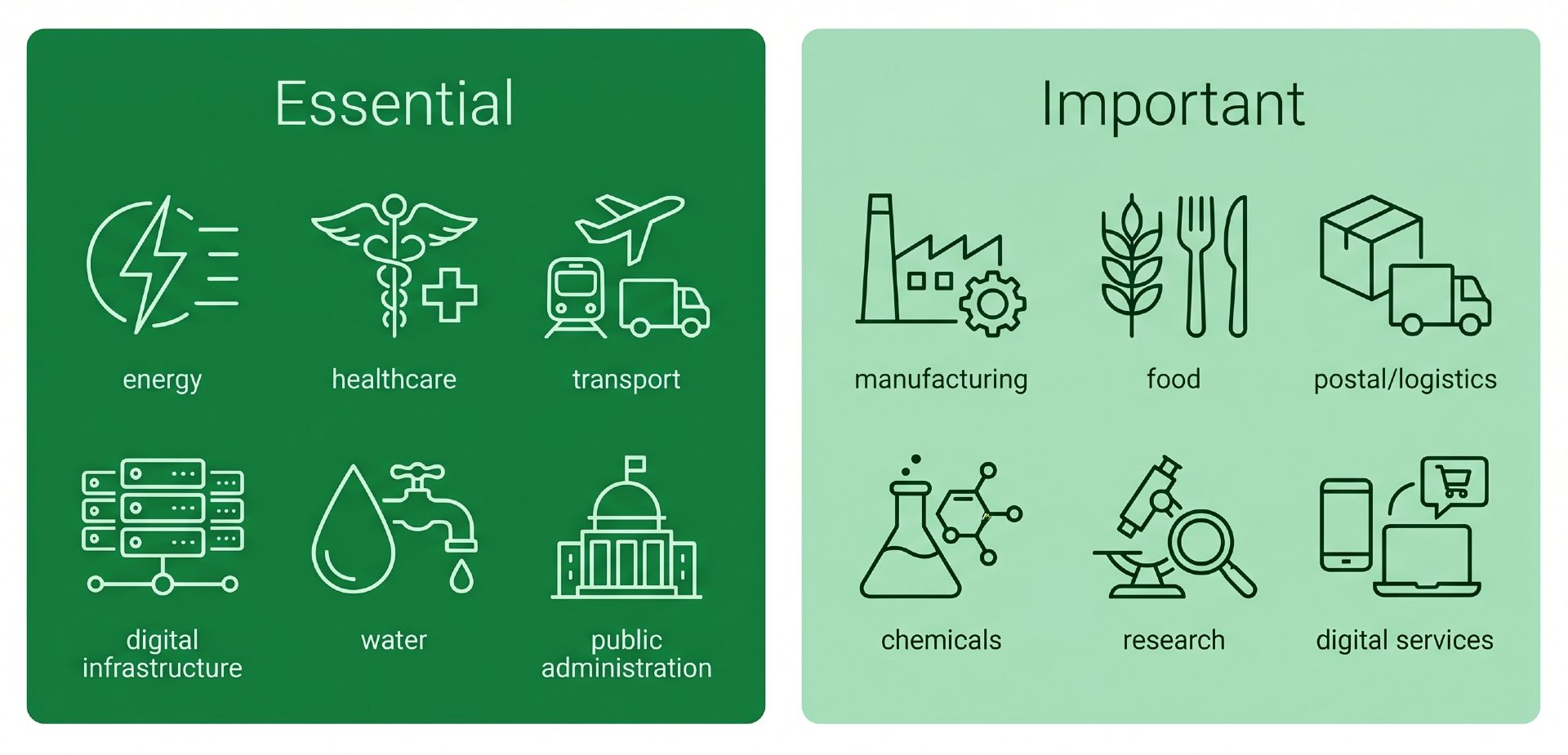
Classification of relevant sectors into essential and important entities under NIS2.
A few criteria can quickly indicate whether your organization falls under the NIS2 Directive.
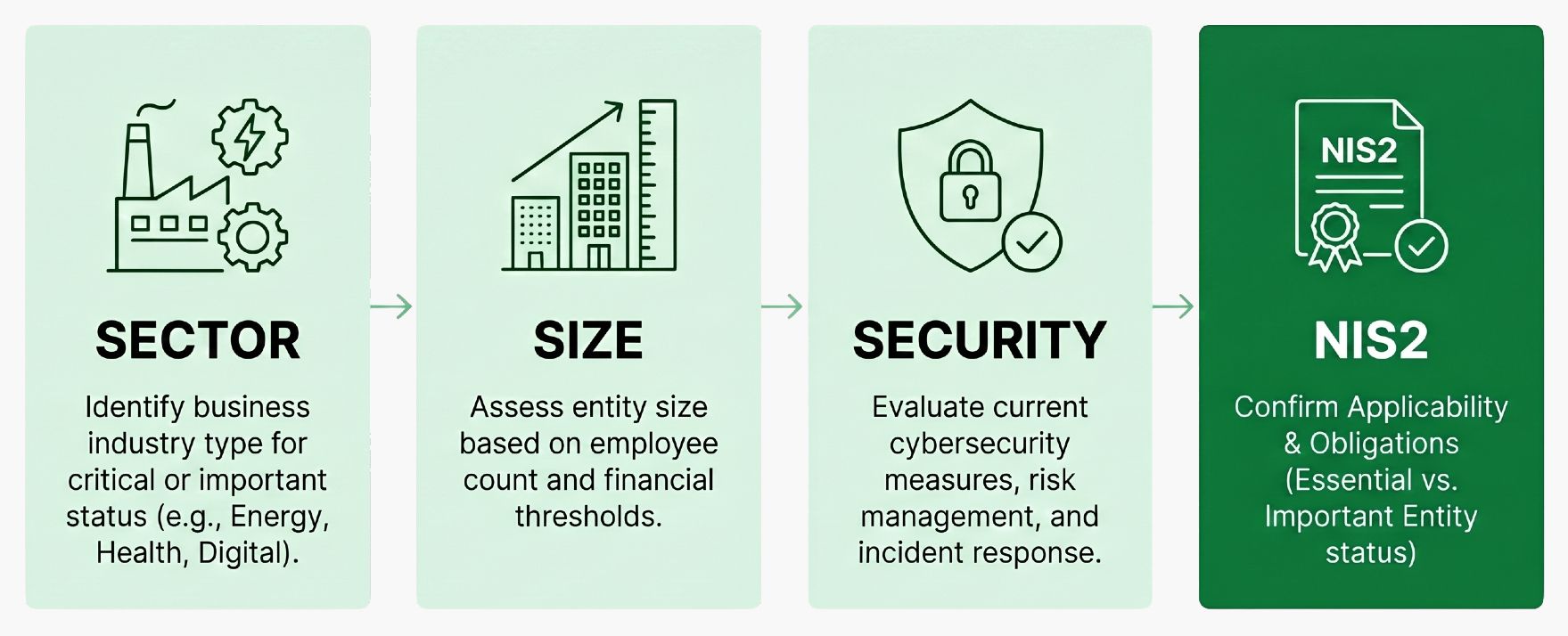
Schematic classification of NIS2 relevance based on key criteria such as sector, size, and security level.
NIS2 requires organizations to implement technical, organizational, and operational security measures. These include, in particular, risk management, vulnerability management, and incident handling.
Security incidents must be reported within defined deadlines. NIS2 provides for a multi-stage reporting process.
| Step | Deadline | Content |
|---|---|---|
| Early Warning | Within 24 hours of becoming aware | Initial notification that a significant security incident has occurred or is likely to occur. |
| Initial Assessment | Within 72 hours of becoming aware | Assessment of severity, impact, and, where available, indicators of compromise. |
| Intermediate Report | At the request of the competent authority | Updated status, further findings, and progress in handling the incident. |
| Final Report | Usually within one month | Root cause analysis, assessment of the impact, and description of the remedial measures taken. |
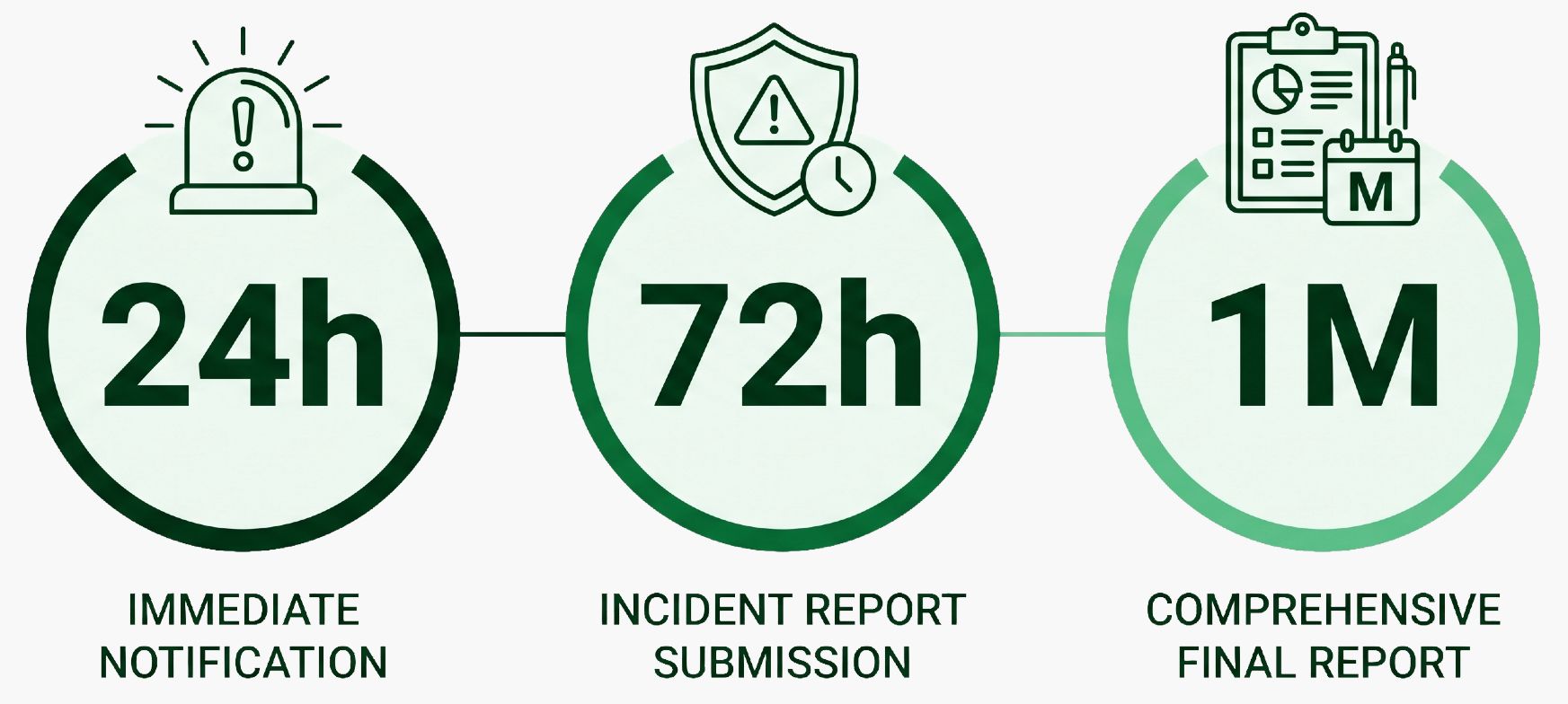
Timelines for reporting security incidents under NIS2.
OPENVAS SECURITY INTELLIGENCE and OPENVAS SCAN support organizations in building a continuous, verifiable security routine. Contact us to learn more.
The NIS2 Directive entered into force in 2023 and was to be transposed into national law by October 2024.
Greenbone supports organizations in technically implementing NIS2 requirements and establishing sustainable security processes.
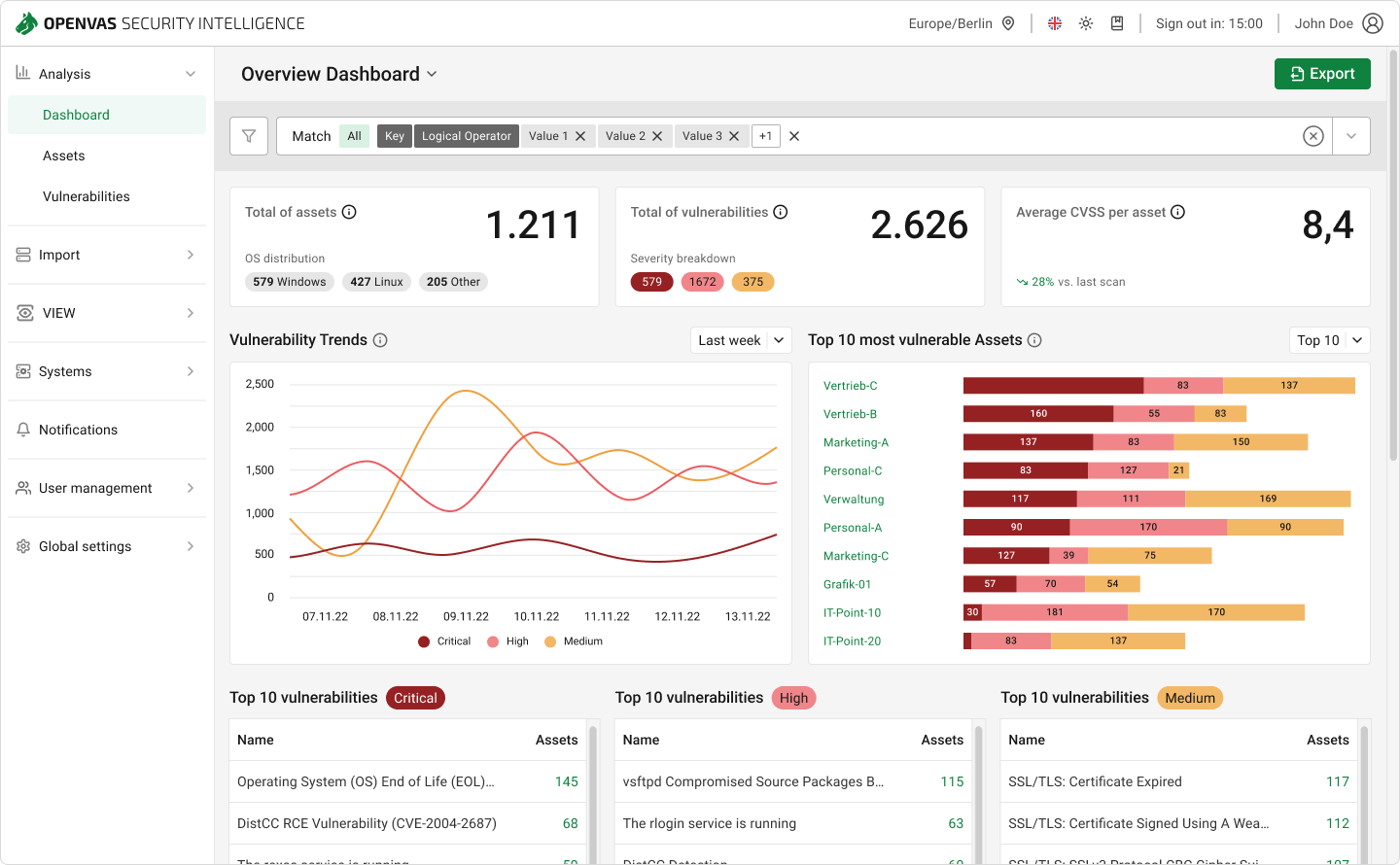
OPENVAS SECURITY INTELLIGENCE dashboard with vulnerability scan results, CVSS severity distribution, and asset inventory, aligned with continuous vulnerability management.
What is NIS2?
NIS2 is an EU Directive for strengthening cybersecurity. It requires organizations in critical and important sectors to implement specific security measures and reporting obligations.
Which Organizations Are Affected by NIS2?
Public and private entities in 18 critical sectors are affected. Sector, size, and the importance of the services provided are decisive.
What Is the Difference Between Essential and Important Entities?
Essential entities are particularly critical organizations and are generally subject to stricter supervisory measures. Important entities must also implement security measures and report incidents.
What Measures Does NIS2 Require?
Among other things, NIS2 requires risk analysis, security concepts, incident handling, business continuity, supply chain security, training, access control, asset management, and vulnerability management.
What Reporting Deadlines Apply to Security Incidents?
For significant security incidents, an early warning is required within 24 hours. An initial assessment follows within 72 hours, and the final report is generally due within one month.
When Does NIS2 Apply in Germany?
The EU Directive entered into force on January 16, 2023. Member States had to transpose it by October 17, 2024. In Germany, the transposition law entered into force on December 6, 2025.
How Does Greenbone Support NIS2?
Greenbone supports organizations with OPENVAS SCAN and OPENVAS SECURITY INTELLIGENCE for ongoing vulnerability management, centralized visibility of assets, and risk prioritization.
Is OPENVAS BASIC Suitable for NIS2?
OPENVAS BASIC can be a practical entry point for small and medium-sized IT environments. For larger or more heavily regulated environments, OPENVAS SCAN and OPENVAS SECURITY INTELLIGENCE are usually better suited.
Check now whether your vulnerability management, asset transparency, and reporting processes meet the requirements. Greenbone supports you in building continuous security processes and making risks visible at an early stage.