Free to try
Windows, Linux, macOS
Virtual appliance
Regular feed updates

OPENVAS FREE at a Glance

OPENVAS FREE is our cross-platform (Windows/Linux/Mac) entry-level virtual appliance that provides new users with a quick and easy way to experience OPENVAS for the first time – ideal for private use and non-professional IT infrastructures. It uses the OPENVAS COMMUNITY FEED instead of the OPENVAS ENTERPRISE FEED and includes a limited set of functions which are only available in our enterprise level products.

Before you try out our OPENVAS FREE, consider a trial of our entry-level enterprise product OPENVAS BASIC or check out the comparison of our products. If you are still interested in OPENVAS FREE just send us a request using the contact form below.

OPENVAS FREE – Get Your Free Download

Installation Guide

Simply follow the instructions for your desired virtual environment to set up OPENVAS FREE.

VMware Workstation Pro

Requirements

  • Compatibility: VMware Workstation Pro, version 17.0 or higher
  • Required resources: 2 virtual CPUs, 5 GB RAM, 500 GB virtual hard disk
  • Virtual network adapter with direct Internet access
    Note: By default, OPENVAS FREE uses bridged networking and obtains an IP address from a DHCP server. The network configuration can be changed if required.

Importing OPENVAS FREE

  1. Download the OVA file of OPENVAS FREE.
  2. Download and install VMware Workstation Pro for the operating system used.
  3. Start Workstation Pro.
  4. Select File > Open… in the menu bar or click Open a Virtual Machine in the Home area.
  5. Select the OVA file of the appliance in the file system.
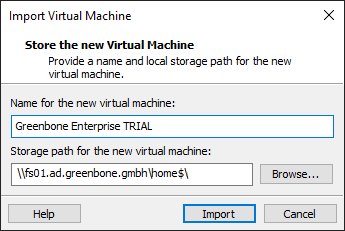
    VMware Workstation Pro: selecting the OVA file of the appliance
  6. Click Import.
    → The appliance is being imported. This process can take up to 10 minutes. When the appliance has been imported, it will appear in the left column in Workstation Pro.
  7. Select the appliance in the list and click Power on this virtual machine.
    → The GOS administration menu is opened.

Performing the Initial System Setup

  1. After starting the appliance, log in using the default credentials admin:admin.
    Note: Change the default password as soon as possible after completing the initial system setup. For instructions, see the user manual.

    → When logging in for the first time, the GOS administration menu displays the Setup Wizard to assist with the initial system configuration.

  2. Select Yes and press Enter to start the wizard.
    → As no web administrator exists yet, one can be created now. A web administrator is required to access the web interface.
  3. Select Yes and press Enter.
  4. Enter a username and password for the web administrator.
    Note: The username can contain any alphanumeric character, hyphens (-), underscores (_), and periods (.).

    The password can contain any character and must not exceed 64 characters. When using special characters, ensure that they are available on all keyboards and supported by all client software and operating systems used. Depending on these factors, copying and pasting special characters may result in an invalid password.
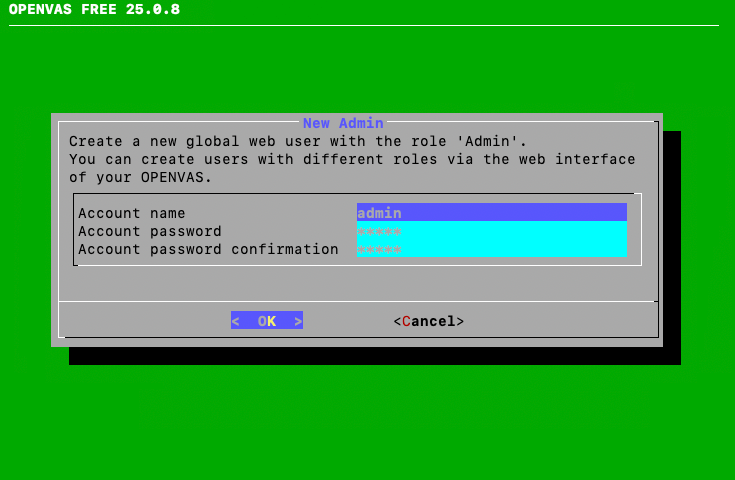
    OPENVAS FREE Setup Wizard: creating a web administrator

  5. Select OK and press Enter.
  6. Confirm the displayed message by pressing Enter.
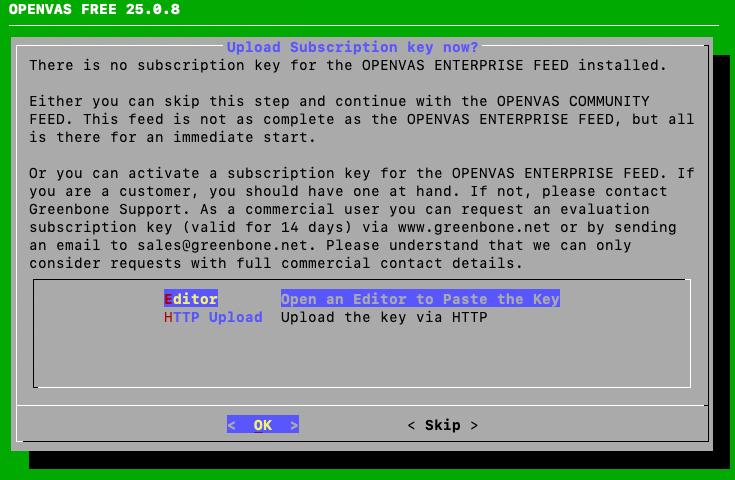
    → As no subscription key for the OPENVAS ENTERPRISE FEED is present on the appliance yet, a key can be imported now.

    Note: If no valid OPENVAS ENTERPRISE FEED subscription key is imported, the appliance uses the public OPENVAS COMMUNITY FEED instead.

    OPENVAS FREE Setup Wizard: adding a subscription key

Option 1: Import via editor

  1. Select Editor and press Enter.
  2. Enter the content of the subscription key.
  3. Save the changes and close the editor.

Option 2: Import via HTTP upload

  1. Select HTTP Upload and press Enter.
  2. Open a web browser and enter the displayed URL.
  3. Upload the subscription key.
  4. Confirm the displayed message by pressing Enter.
    → After completing the final step, the GOS administration menu opens. For information on using the GOS administration menu, see the user manual.

Accessing the Web Interface

The web interface is the main user interface of the appliance. It can be accessed as follows:

  1. Open a web browser and enter the IP address of the appliance’s web interface.
    Note: The IP address of the web interface is displayed when logging in to the GOS administration menu. It can also be viewed by selecting About in the GOS administration menu.
  2. Log in with the web administrator credentials created during the initial system setup.
    Note: OPENVAS FREE uses a self-signed TLS certificate. Because the certificate is self-signed, the web browser displays a security warning. To access the web interface, add a security exception for the certificate.

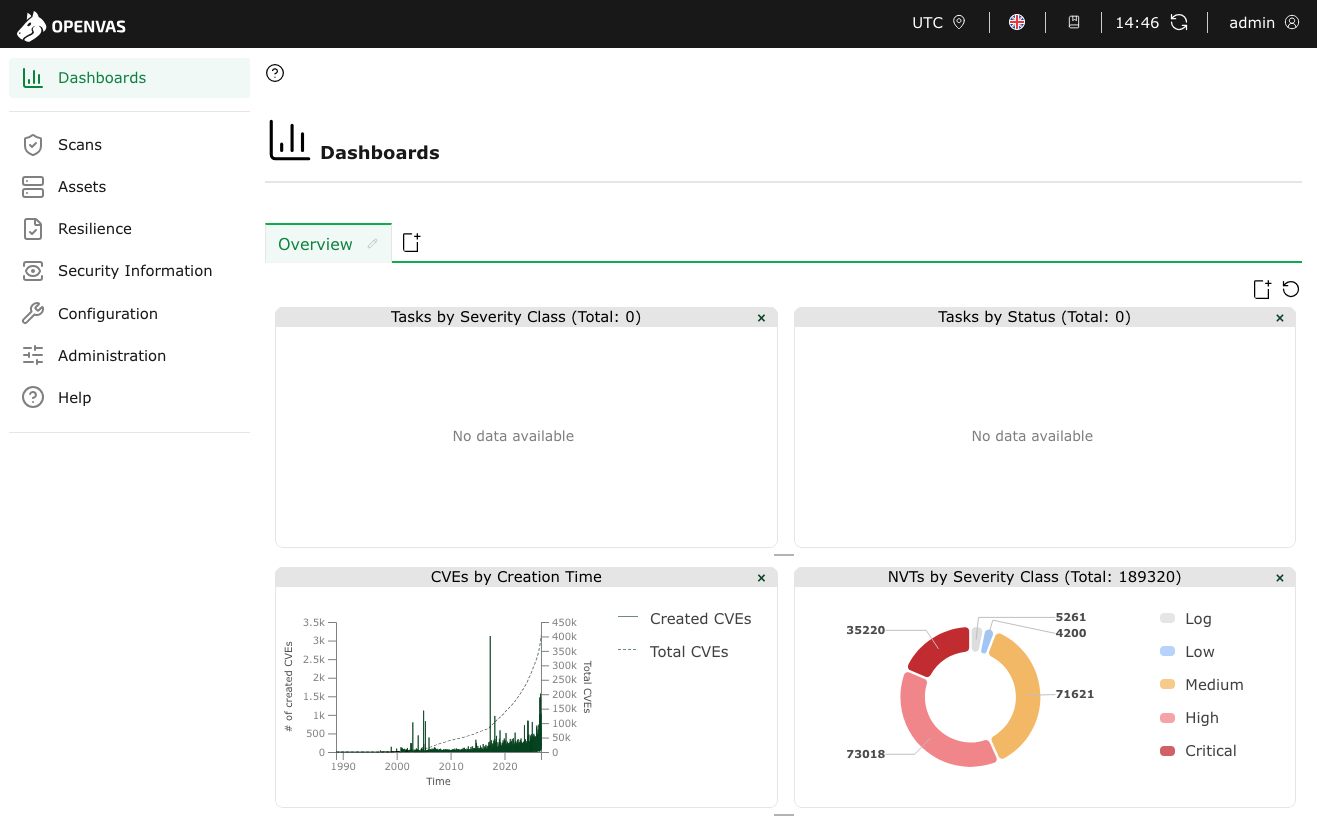
    → The web interface is opened.
    OPENVAS FREE web interface: Dashboard

Configuring the First Scan

Note: Complete all steps in the section Performing the Initial System Setup before configuring the first scan.
  1. Select Scans > Tasks in the menu bar, move the cursor over the plus icon in the upper left corner, and select New Task.
  2. Enter a name for the task.
  3. For Scan Targets, click the plus icon.
  4. In the new dialog, enter a name for the target and specify a host to scan.
    Note: Specify either an IP address or a hostname. In both cases it is necessary that the appliance can connect to the system. If a hostname is used, the appliance must also be able to resolve it.
  5. To perform an authenticated scan, click the plus icon for the desired credential type and create credentials.
  6. Save the credentials, followed by the target and the task.
  7. To start the scan, click the triangle icon (▷) for the newly created task.
    → The task is added to the waiting queue. Afterwards, the scanner starts the scan. Once the scan has started, click the bar in the Status column to view the report. The complete report is available when the task status changes to Done.

Additional Notes

  • Shutting down or restarting the virtual machine should only be done via the menu option Maintenance > Power in the GOS administration menu to ensure that important system processes, such as the feed update, are not interrupted.

OPENVAS FREE provides a quick and easy way to evaluate OPENVAS SCAN on Microsoft Windows, Linux, and macOS.

  • OPENVAS FREE uses the OPENVAS COMMUNITY FEED by default but also supports the more comprehensive OPENVAS ENTERPRISE FEED when a valid subscription key is imported.
  • Feed updates are provided regularly, but OPENVAS FREE itself does not support software upgrades. The commercial OPENVAS SCAN models support software upgrades and include access to the OPENVAS ENTERPRISE FEED.
  • Enterprise support is only available to customers with an OPENVAS ENTERPRISE FEED subscription key. OPENVAS FREE does not include support by default.
  • Users can voluntarily discuss OPENVAS FREE features and questions in the Greenbone Community Portal.
  • Advanced features such as TLS certificate management, schedules, notifications, integrated backups, master-sensor functionality, VLANs, network namespaces, and Airgap support are not included in OPENVAS FREE. These features are available with OPENVAS SCAN, which can be requested from Greenbone.

Version:
25.0.9

Oracle VirtualBox

Requirements

  • Compatibility: Oracle VirtualBox, version 7.0 or higher
  • Required resources: 2 virtual CPUs, 5 GB RAM, 500 GB virtual hard disk
  • Virtual network adapter with direct Internet access
    Note: By default, OPENVAS FREE uses bridged networking and obtains an IP address from a DHCP server. The network configuration can be changed if required.

Importing OPENVAS FREE

  1. Download the OVA file of OPENVAS FREE.
  2. Download and install Oracle VirtualBox for the operating system used.
  3. Start VirtualBox.
  4. Select File > Import Appliance… in the menu bar.
  5. Click folder icon and select the OVA file of the appliance in the file system.
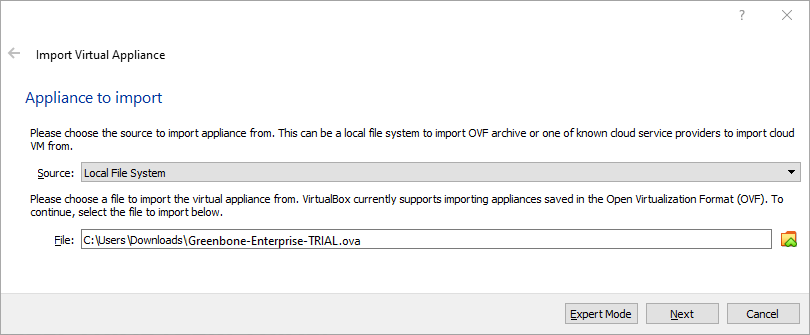
    VirtualBox: selecting the OVA file of the appliance
  6. Click Next.
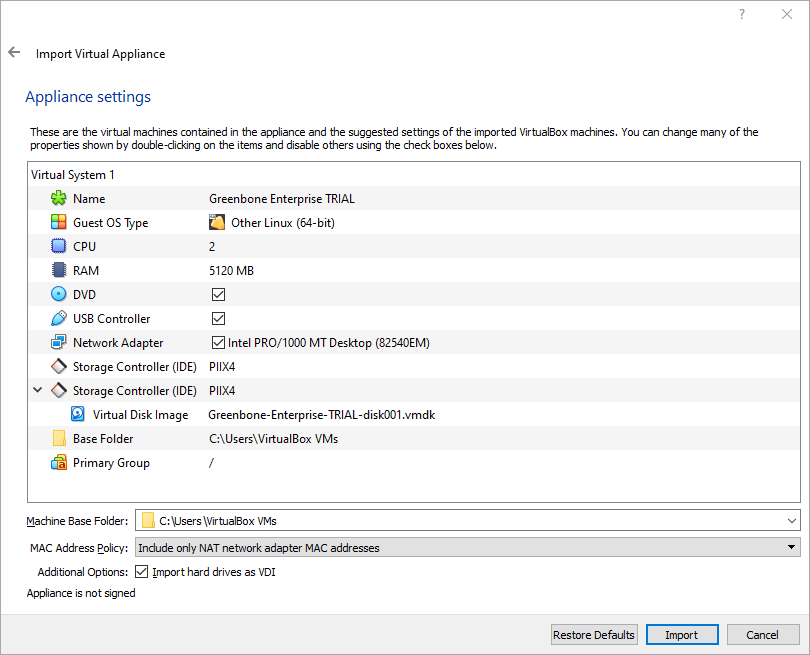
    → The appliance settings are displayed.
    VirtualBox: checking the appliance settings
  7. Check the configuration of the virtual machine. Values can be changed by double-clicking in the input field of the corresponding value.
  8. Click Import.
    → The appliance is being imported. This process can take up to 10 minutes. When the appliance has been imported, it will appear in the left column in VirtualBox.
  9. Select the appliance in the list and click Start.
    → If an error message is displayed, continue with step 10. If no error message is displayed, the GOS administration menu is opened and you can proceed with the initial system setup.
  10. Select the appliance in the list and click Settings.
  11. Select Network > Adapter 1.
  12. Choose the correct network adapter in the drop-down list Name.
  13. Click OK.
  14. Select the appliance in the list and click Start.
    → The GOS administration menu is opened and you can proceed with the initial system setup.

Performing the Initial System Setup

  1. After starting the appliance, log in using the default credentials admin:admin.
    Note: Change the default password as soon as possible after completing the initial system setup. For instructions, see the user manual.

    → When logging in for the first time, the GOS administration menu displays the Setup Wizard to assist with the initial system configuration.

  2. Select Yes and press Enter to start the wizard.
    → As no web administrator exists yet, one can be created now. A web administrator is required to access the web interface.
  3. Select Yes and press Enter.
  4. Enter a username and password for the web administrator.
    Note: The username can contain any alphanumeric character, hyphens (-), underscores (_), and periods (.).

    The password can contain any character and must not exceed 64 characters. When using special characters, ensure that they are available on all keyboards and supported by all client software and operating systems used. Depending on these factors, copying and pasting special characters may result in an invalid password.

    OPENVAS FREE Setup Wizard: creating a web administrator

  5. Select OK and press Enter.
  6. Confirm the displayed message by pressing Enter.
    → As no subscription key for the OPENVAS ENTERPRISE FEED is present on the appliance yet, a key can be imported now.

    Note: If no valid OPENVAS ENTERPRISE FEED subscription key is imported, the appliance uses the public OPENVAS COMMUNITY FEED instead.

    OPENVAS FREE Setup Wizard: adding a subscription key

Option 1: Import via editor

  1. Select Editor and press Enter.
  2. Enter the content of the subscription key.
  3. Save the changes and close the editor.

Option 2: Import via HTTP upload

  1. Select HTTP Upload and press Enter.
  2. Open a web browser and enter the displayed URL.
  3. Upload the subscription key.
  4. Confirm the displayed message by pressing Enter.
    → After completing the final step, the GOS administration menu opens. For information on using the GOS administration menu, see the user manual.

Accessing the Web Interface

The web interface is the main user interface of the appliance. It can be accessed as follows:

  1. Open a web browser and enter the IP address of the appliance’s web interface.
    Note: The IP address of the web interface is displayed when logging in to the GOS administration menu. It can also be viewed by selecting About in the GOS administration menu.
  2. Log in with the web administrator credentials created during the initial system setup.
    Note: OPENVAS FREE uses a self-signed TLS certificate. Because the certificate is self-signed, the web browser displays a security warning. To access the web interface, add a security exception for the certificate.

    → The web interface is opened.
    OPENVAS FREE web interface: Dashboard

Configuring the First Scan

Note: Complete all steps in the section Performing the Initial System Setup before configuring the first scan.
  1. Select Scans > Tasks in the menu bar, move the cursor over the plus icon in the upper left corner, and select New Task.
  2. Enter a name for the task.
  3. For Scan Targets, click the plus icon.
  4. In the new dialog, enter a name for the target and specify a host to scan.
    Note: Specify either an IP address or a hostname. In both cases it is necessary that the appliance can connect to the system. If a hostname is used, the appliance must also be able to resolve it.
  5. To perform an authenticated scan, click the plus icon for the desired credential type and create credentials.
  6. Save the credentials, followed by the target and the task.
  7. To start the scan, click the triangle icon (▷) for the newly created task.
    → The task is added to the waiting queue. Afterwards, the scanner starts the scan. Once the scan has started, click the bar in the Status column to view the report. The complete report is available when the task status changes to Done.

Additional Notes

  • Shutting down or restarting the virtual machine should only be done via the menu option Maintenance > Power in the GOS administration menu to ensure that important system processes, such as the feed update, are not interrupted.

OPENVAS FREE provides a quick and easy way to evaluate OPENVAS SCAN on Microsoft Windows, Linux, and macOS.

  • OPENVAS FREE uses the OPENVAS COMMUNITY FEED by default but also supports the more comprehensive OPENVAS ENTERPRISE FEED when a valid subscription key is imported.
  • Feed updates are provided regularly, but OPENVAS FREE itself does not support software upgrades. The commercial OPENVAS SCAN models support software upgrades and include access to the OPENVAS ENTERPRISE FEED.
  • Enterprise support is only available to customers with an OPENVAS ENTERPRISE FEED subscription key. OPENVAS FREE does not include support by default.
  • Users can voluntarily discuss OPENVAS FREE features and questions in the Greenbone Community Portal.
  • Advanced features such as TLS certificate management, schedules, notifications, integrated backups, master-sensor functionality, VLANs, network namespaces, and Airgap support are not included in OPENVAS FREE. These features are available with OPENVAS SCAN, which can be requested from Greenbone.

Version:
25.0.9